

Gender
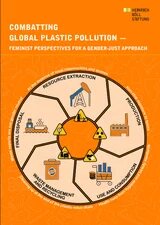
People are affected differently by the toxins contained in plastic. Biological reasons are part of the problem, but also social inequalities and predefined gender roles. Female bodies are more sensitive to some toxic chemicals, especially during certain life stages. But exposure to toxins and pollutants is also higher in the low-wage sector, and in – often poor – communities located near petrochemical plants, landfills or incinerators.
See the overview page
Articles


Publications

© Heinrich-Böll-Stiftung e.V.
Schumannstraße 8
10117 Berlin
T +49 (30) 285 34-0
F +49 (30) 285 34-109
www.boell.de
info@boell.de